
That Frustrating Reverse: What's Going On?
You press the button on your garage door remote, the door starts its descent, and then — just before it reaches the floor — it reverses and goes right back up. You try again. Same thing. Maybe it works on the third attempt, maybe it doesn't. Either way, something is clearly wrong.
This is one of the most common garage door complaints we hear from homeowners in Boynton Beach, and the good news is that it's almost always fixable. The tricky part is figuring out which of several possible causes is behind the problem. Let's walk through the most likely culprits, what you can safely check yourself, and when it's time to call a professional.
Understanding Why Garage Doors Reverse
Modern garage door openers are equipped with safety features mandated by federal law since 1993. Two of these features are directly related to the reversing problem:
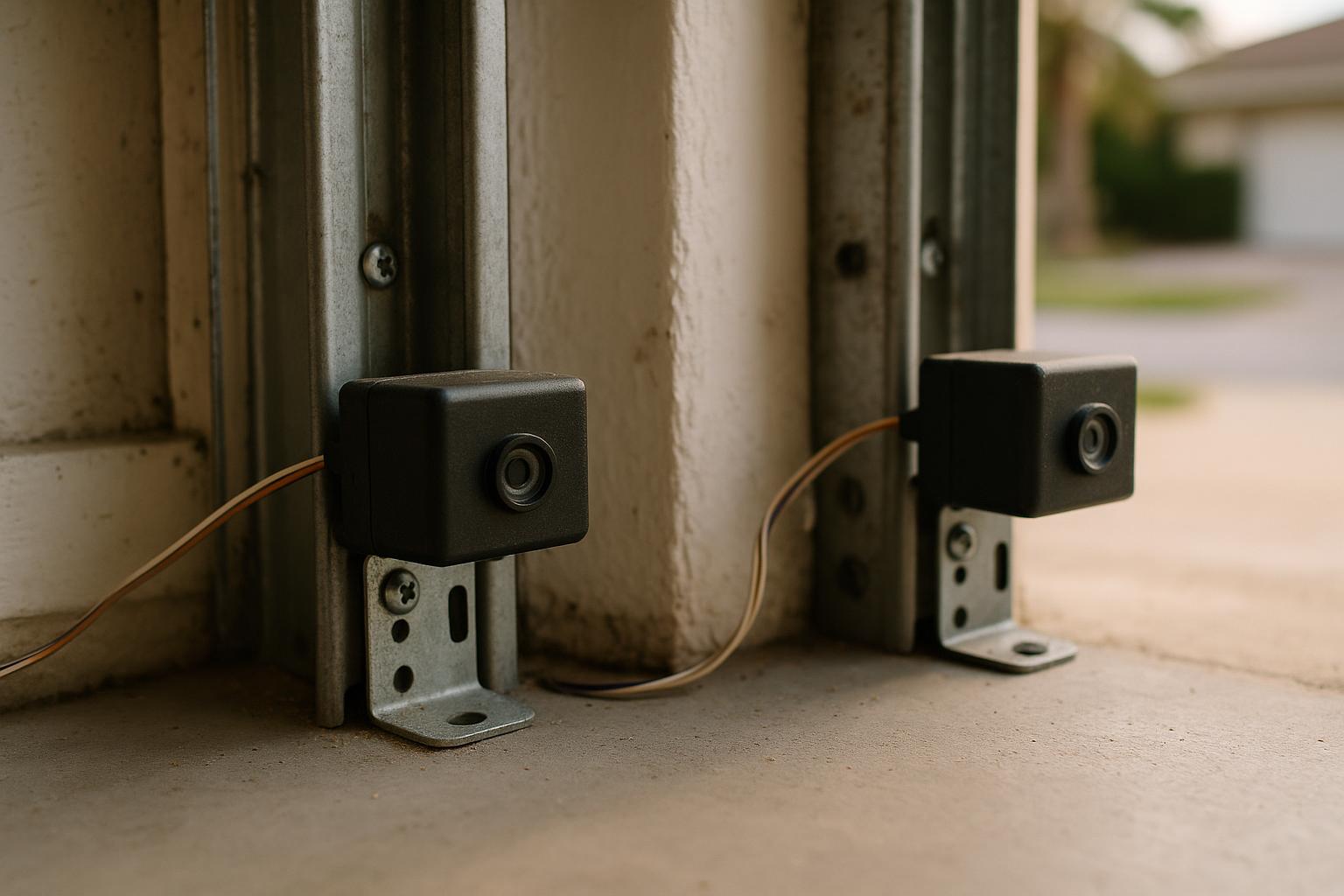
- Photo-eye sensors: Two small sensors mounted near the bottom of your garage door tracks on either side. They project an invisible beam across the opening. If anything breaks that beam while the door is closing, the door reverses to prevent crushing a person, pet, or object.
- Auto-reverse force settings: Your opener has adjustable force settings that tell it how much resistance is normal. If the door encounters more resistance than expected — or the settings are off — the opener interprets it as an obstruction and reverses.
Both of these systems exist to keep your family safe, so when they malfunction, it's important to address the root cause rather than try to bypass them.
The Most Common Causes (And What to Do)
1. Blocked or Misaligned Photo-Eye Sensors
This is the number one reason garage doors reverse unexpectedly. Those small sensors on either side of your garage door opening need a clear, unobstructed line of sight to each other. Here's what can go wrong:
- A cobweb, dirt, or moisture has built up on the sensor lens
- One sensor has been bumped and is no longer aligned with the other
- Direct afternoon sunlight is interfering with the infrared beam
- A wire connection has come loose
Living in South Florida, we see the sunlight issue quite a bit. The intense Boynton Beach afternoon sun can overwhelm the sensor's infrared signal, causing the door to think something is blocking its path. You can try gently wiping the lenses with a soft cloth and checking that both sensor lights are solid (not blinking). If one light is blinking, that sensor is likely misaligned or has a wiring issue.
2. Incorrect Close-Force or Travel-Limit Settings
Your garage door opener has small adjustment dials or screws — usually on the back or side of the motor unit — that control how far the door travels and how much force it uses. If the close-force setting is too low, the opener will think it's hitting something and reverse. If the travel limit is set too short, the door will reverse before it fully closes because the opener thinks it has gone too far.
You can consult your opener's manual to locate these adjustments and make small, incremental changes. However, if you're not comfortable working with the opener mechanism, this is a quick fix for a technician.
3. Worn or Damaged Tracks
Over time, the metal tracks that guide your garage door can develop bends, dents, or buildup of debris. When the rollers hit a rough spot in the track, the added resistance can trigger the auto-reverse. Inspect your tracks visually for any obvious damage. Minor debris can be wiped away, but bent tracks should be repaired by a professional to avoid further damage to the door or the opener.
4. Broken or Worn Rollers
Garage door rollers take a beating over the years, especially in humid climates where metal components can corrode. Cracked nylon rollers or rusted steel rollers create friction that the opener interprets as an obstruction. If you notice your door sounds louder than usual or seems to hesitate at certain points, worn rollers could be the issue.
5. Spring Problems
Your garage door springs do the heavy lifting — literally. They counterbalance the weight of the door so the opener only has to provide a small amount of force. When a spring is weakening or has broken, the full weight of the door falls on the opener, which can cause it to reverse. A standard two-car garage door can weigh 200 to 300 pounds, so a failing spring is not something to ignore.
Important: Garage door springs are under extreme tension and can cause serious injury. Spring inspection and replacement should always be handled by a trained technician.
6. Weatherstripping or Threshold Seal Interference
Here's one that surprises a lot of homeowners. New or swollen weatherstripping along the bottom of your garage door can create just enough resistance when the door meets the floor to trigger the auto-reverse. In Boynton Beach, the heat and humidity can cause rubber seals to expand. Check whether the bottom seal is bunching up or catching on the concrete. Trimming or replacing the seal often solves the problem.
What You Can Safely Check Yourself
- Clean the photo-eye sensor lenses with a soft cloth
- Make sure nothing is sitting in the path of the sensors
- Look for obvious obstructions in the tracks
- Listen for unusual grinding or scraping sounds
- Check that the bottom weatherstrip isn't bunching
These basic checks take just a few minutes and resolve the issue about half the time.
When to Call a Professional
If you've gone through the checklist above and the door is still reversing, it's time to bring in a garage door technician. Issues involving springs, track alignment, opener motor problems, or electrical wiring require specialized tools and experience. Attempting these repairs without training can result in injury or further damage to your garage door system.
At Boynton Beach Garage Door, we diagnose reversing issues quickly because we've seen every variation of this problem across homes in Boynton Beach, Delray Beach, Lake Worth Beach, and the surrounding communities. Most reversing problems can be resolved in a single visit, and we'll make sure your safety systems are working correctly before we leave.
Don't Ignore a Reversing Garage Door
It might seem like a minor annoyance, but a garage door that won't close properly is a security risk and a safety concern. An open garage is an invitation to intruders, pests, and weather damage — none of which you want, especially during South Florida's storm season. If your door has been acting up, address it sooner rather than later. A small repair today can prevent a much bigger problem tomorrow.