
That Loud Garage Door Isn't Just a Nuisance — It's Trying to Tell You Something
You hit the button, and instead of a smooth, quiet operation, your garage door groans, squeals, rattles, or bangs its way up the track. If your garage door has started making noises that wake up the whole house — or the whole neighborhood — you're not alone. It's one of the most common complaints we hear from homeowners in Boynton Beach, and the good news is that most causes are fixable once you know what you're dealing with.
A noisy garage door is more than an inconvenience. Those sounds are usually symptoms of wear, misalignment, or parts that need lubrication or replacement. Ignoring them can lead to bigger, more expensive problems down the road. Let's break down the most common causes of a loud garage door and what you can do about each one.
Grinding or Scraping Sounds
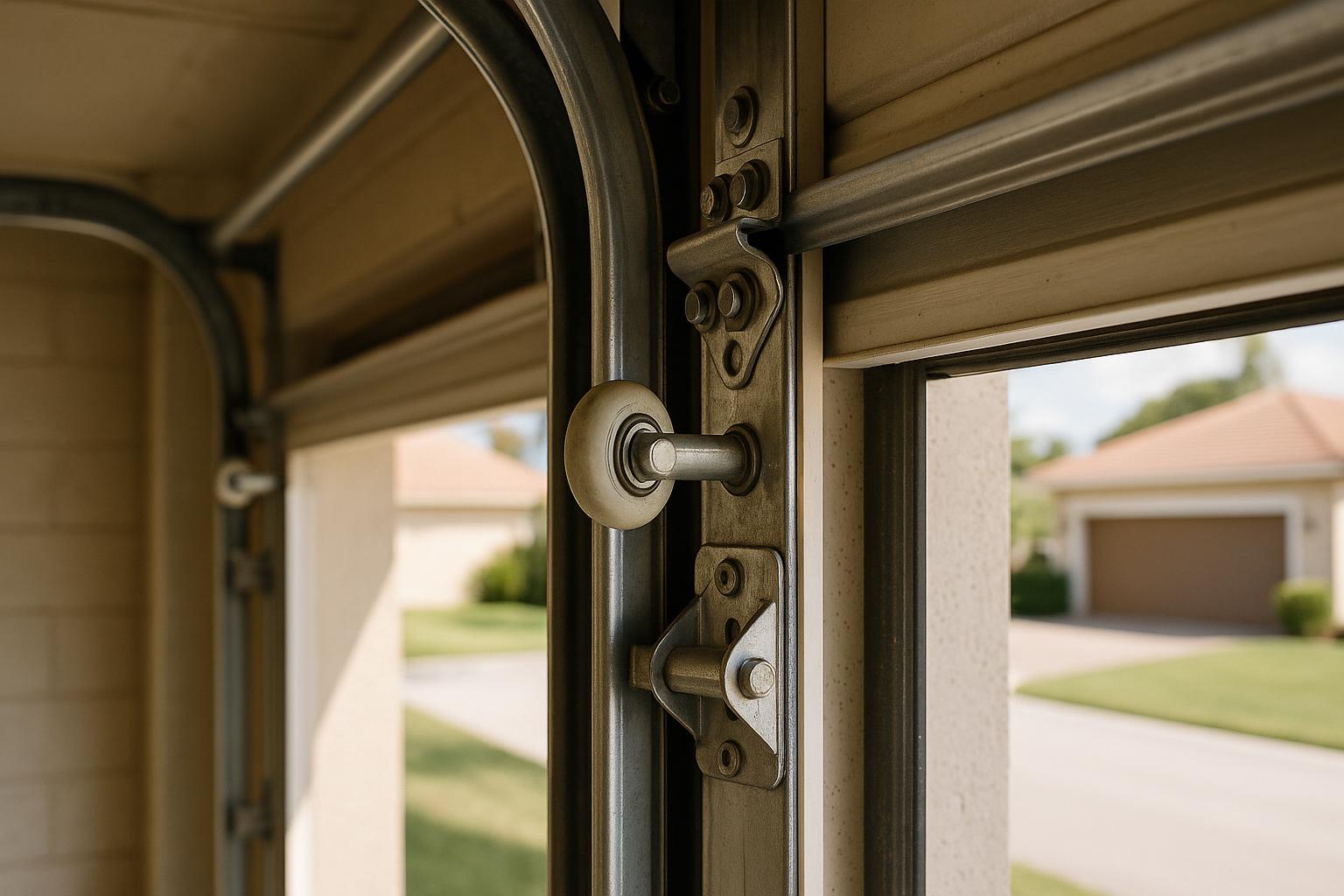
A grinding or scraping noise usually points to a problem with the tracks or rollers. Over time, metal rollers can wear down, develop flat spots, or accumulate debris that creates friction as the door moves. If the tracks themselves are bent, misaligned, or have buildup inside them, the door can scrape against them as it travels up and down.
What to do: Start by visually inspecting the tracks on both sides of the door. Look for visible dents, bends, or debris. If the tracks look clean and straight, the rollers are likely the culprit. Worn-out steel rollers can often be replaced with nylon rollers, which are significantly quieter and don't require as much lubrication. If the tracks are bent or misaligned, it's best to call a professional — forcing a door along damaged tracks can cause the door to come off the track entirely.
Squeaking or Squealing
High-pitched squeaking or squealing is almost always a lubrication issue. Your garage door has a lot of moving metal parts — springs, hinges, rollers, and bearings — and when they dry out, metal-on-metal contact creates that unmistakable squeal. South Florida's humidity can actually accelerate this process, as moisture causes surface corrosion that increases friction.
What to do: Apply a garage door-specific lubricant (not WD-40, which is a solvent, not a lubricant) to the following parts:
- Torsion springs along the top of the door
- Hinges where they pivot
- Rollers, especially the bearings inside them
- The track where the rollers make contact (lightly)
- The opener's chain or screw drive, if applicable
A proper lubrication routine twice a year can eliminate most squeaking and extend the life of your hardware significantly.
Rattling or Vibrating
If your garage door sounds like a box of loose bolts every time it opens, something is probably, well, loose. Garage doors operate under a lot of vibration and mechanical stress, and over time, nuts, bolts, and screws can work themselves loose. The brackets that hold the tracks to the wall, the hinges connecting the door panels, and the hardware on the opener itself are all common culprits.
What to do: With the door closed, use a socket wrench to check and tighten all visible nuts and bolts on the tracks, hinges, and mounting brackets. Be careful not to overtighten — you can strip threads or crack brackets. If the rattling seems to come from the opener unit itself, check that it's securely mounted to the ceiling and that the chain or belt isn't sagging excessively.
Banging or Popping Sounds
A loud bang or pop when the door starts moving is more concerning. This often indicates a problem with the torsion springs. As springs age, they can develop weak spots or slight deformations that cause them to shift or pop under tension. In some cases, a loud bang means a spring has already broken — you'll usually know because the door will feel extremely heavy or won't open at all.
What to do: Spring issues are not a DIY repair. Torsion springs are under extreme tension and can cause serious injury if handled improperly. If you hear a sudden loud bang from your garage, especially if the door isn't operating normally afterward, call a garage door technician right away. Here in Boynton Beach, we see spring failures year-round due to the constant use and humidity that wears on the metal.
Rumbling or Vibration from the Opener
If the noise seems to come from the ceiling-mounted opener rather than the door itself, the type of drive system matters. Chain-drive openers are the most common and also the loudest — the metal chain running along a metal rail creates a rumbling vibration that resonates through the ceiling and into your living space. This is especially noticeable if your garage is attached to your home and there are living spaces above or adjacent to the garage.
What to do: If your chain-drive opener is in good working condition but just too loud, you have a couple of options. Adding a vibration isolation kit between the opener and the ceiling can reduce the noise that transfers into your home. For a more permanent solution, upgrading to a belt-drive opener dramatically reduces operating noise. Belt-drive openers use a reinforced rubber belt instead of a metal chain, making them ideal for homes where the garage is close to bedrooms or living areas.
Clicking or Ticking
A rhythmic clicking or ticking sound during operation is often related to the opener's drive mechanism. On chain-drive systems, a worn or loose chain can tick against the rail. On screw-drive openers, the ticking might come from the trolley carriage as it moves along the threaded rod. In some cases, clicking can also come from the safety sensors at the base of the door if their wiring is loose or they're slightly misaligned.
What to do: Check the chain tension — most openers have an adjustment mechanism to tighten or loosen the chain. It should have about a half-inch of play at the midpoint. For screw-drive openers, lubricating the entire length of the drive screw with garage door lubricant usually resolves the issue. If the clicking comes from the sensor area, make sure the wires are securely connected and the sensor eyes are aligned.
When to Call a Professional
Some garage door noises are easy to fix with basic tools and a can of lubricant. Others are warning signs of a failure that could leave your door inoperable — or worse, dangerous. As a general rule, call a professional if:
- The noise is accompanied by the door not opening or closing properly
- You suspect a spring issue (loud bang, heavy door)
- The tracks are visibly bent or the door appears crooked
- You've lubricated and tightened everything but the noise persists
- The opener is more than 10-15 years old and getting progressively louder
At Boynton Beach Garage Door, we diagnose noisy garage doors every day across Boynton Beach, Delray Beach, Lake Worth Beach, and the surrounding communities. Whether it's a simple lubrication issue or a part that needs replacing, we'll identify the problem and fix it so your door runs quietly and reliably.
Don't Wait Until the Noise Becomes a Breakdown
A noisy garage door is your early warning system. The sounds it makes are clues about what's wearing out, what's loose, and what's about to fail. Addressing these issues early saves you money, prevents inconvenient breakdowns, and keeps your garage door safe for your family. If your garage door has been getting louder and you're not sure what's causing it, give us a call. We'll get it sorted out.