
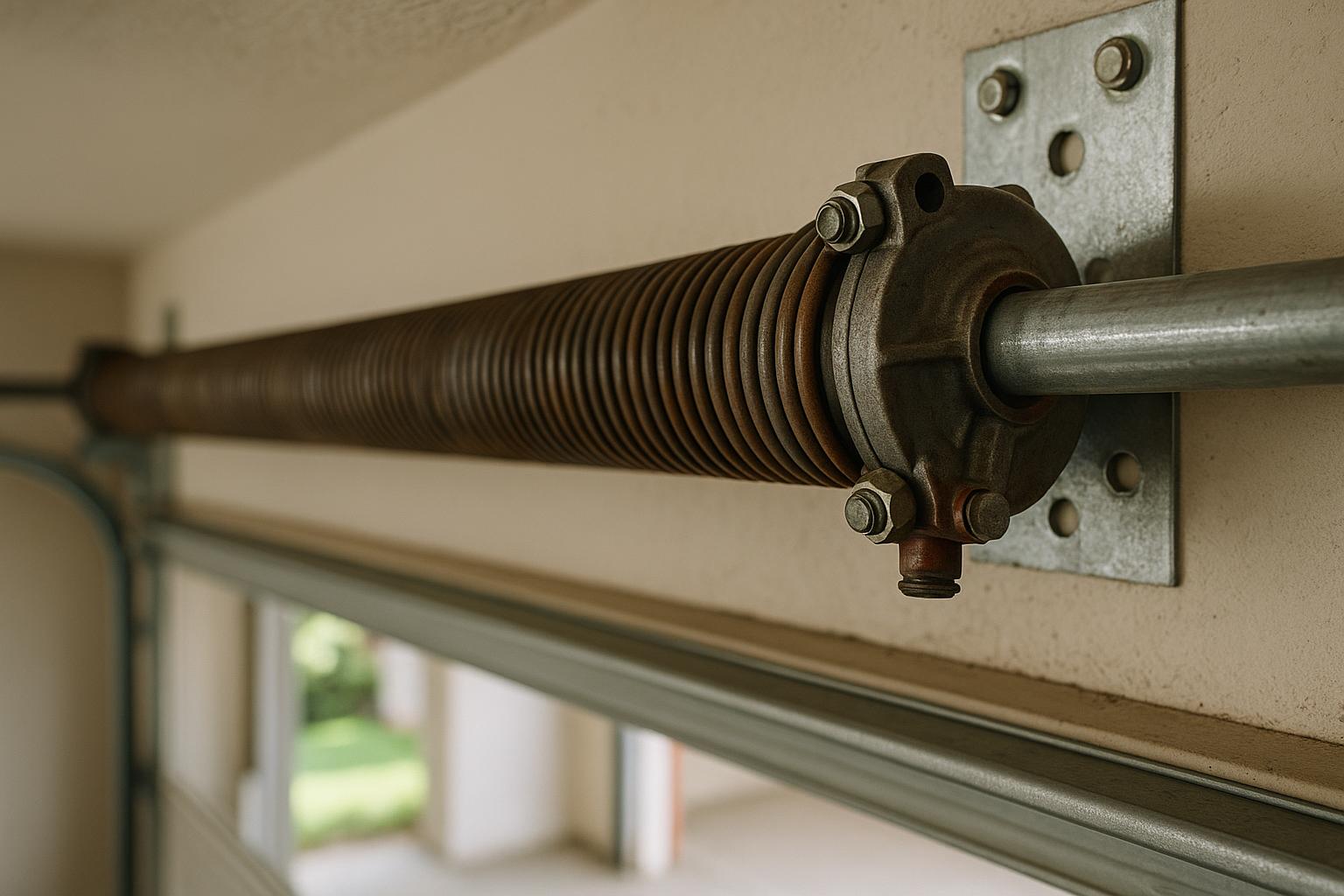
Your Garage Door Springs Are Trying to Tell You Something
If you've ever heard a garage door spring snap, you know it's not subtle. It sounds like a gunshot echoing through your garage, and it leaves your door completely inoperable — or worse, dangerously unbalanced. The good news is that springs almost never fail without warning. There are clear signs that your garage door springs are reaching the end of their lifespan, and catching them early can save you from an emergency repair, potential injury, and a lot of frustration.
Here in Boynton Beach, where we use our garage doors multiple times a day and the humidity takes a toll on metal components, spring failure is one of the most common service calls we handle. Let's walk through the warning signs so you can stay ahead of the problem.
How Garage Door Springs Work (And Why They Wear Out)
Before diving into the warning signs, it helps to understand what your springs actually do. Garage door springs carry the weight of the door — which can be anywhere from 130 to over 400 pounds depending on the material and size. When you press your opener remote, the motor isn't doing most of the heavy lifting. The springs are.
There are two main types of garage door springs:
- Torsion springs — mounted on a metal shaft above the door opening. These are the most common type in modern residential installations.
- Extension springs — mounted along the horizontal tracks on either side of the door. These are more common in older homes.
Both types are rated for a specific number of cycles. One cycle equals one full open and one full close. Most standard springs are rated for about 10,000 cycles, which translates to roughly 7 to 10 years of typical use. High-cycle springs can last 20,000 to 50,000 cycles, but they cost more upfront.
Once a spring approaches its cycle limit, it starts losing tension and showing visible signs of fatigue. That's your window to act.
7 Warning Signs Your Garage Door Springs Are Failing
1. The Door Feels Heavier Than Usual
Try this simple test: disconnect your garage door opener by pulling the emergency release cord, then manually lift the door about halfway. A properly balanced door with healthy springs should stay in place on its own. If the door feels extremely heavy, slides back down, or is difficult to lift at all, your springs are losing tension and can no longer counterbalance the door's weight.
2. The Door Opens Unevenly or Crooked
If your garage door tilts to one side as it opens or closes, one of your springs may be weaker than the other — or one may have already broken. This is especially common with extension spring systems where each side operates somewhat independently. An uneven door puts extra stress on the opener, the tracks, and the remaining spring, which can lead to a cascade of problems.
3. You Hear Loud Squeaking or Grinding
Some noise during operation is normal, but a sudden increase in squeaking, popping, or grinding sounds often points to springs that are straining under load. As springs wear out, the coils can rub against each other or bind up, creating sounds that weren't there before. Don't just spray lubricant and ignore it — have the springs inspected.
4. Visible Gaps in the Spring Coils
This is one of the most obvious signs, but many homeowners never look up at their torsion spring. A healthy torsion spring has tightly wound coils with no visible separation. If you see a gap — even a small one — it means the spring has already partially failed. A gap in the coils indicates the spring has stretched and lost its ability to store energy properly. This spring needs to be replaced immediately.
5. The Door Slams Shut Quickly
When springs are functioning correctly, they control the speed at which your door closes. Worn-out springs can't manage the weight anymore, causing the door to drop faster than it should. This is a serious safety hazard, especially if you have children or pets who might be near the door. If your door is closing noticeably faster than it used to, don't wait to call a professional.
6. The Opener Is Struggling or Straining
Your garage door opener is designed to move the door, not carry its weight. When springs weaken, the opener has to work much harder to lift the door. You might notice the motor running louder, the door opening more slowly, or the opener stopping partway through the cycle. Continuing to run the opener under these conditions can burn out the motor, turning a spring replacement into a spring and opener replacement.
7. Rust on the Spring Coils
Living in South Florida means dealing with salt air and humidity year-round, and Boynton Beach is no exception. Rust is a spring killer. It increases friction between the coils, accelerates metal fatigue, and shortens the spring's lifespan significantly. If you see rust forming on your springs, it's worth having them inspected even if they're not showing other symptoms yet. Regular lubrication with a silicone-based spray can slow rust down, but it can't reverse damage that's already done.
Can You Replace Garage Door Springs Yourself?
We'll be straightforward with you: garage door spring replacement is one of the most dangerous DIY home repairs you can attempt. Torsion springs are under extreme tension — enough force to cause serious injury or death if they're handled incorrectly. Extension springs under load can also be dangerous if they're not properly secured with safety cables.
Every year, thousands of people are injured in garage door spring accidents across the country. This is not a job for YouTube tutorials and borrowed tools. A trained technician has the proper winding bars, experience, and safety knowledge to replace springs quickly and correctly.
What to Expect During a Spring Replacement
When you call Boynton Beach Garage Door for a spring replacement, here's what the process typically looks like:
- Inspection — We assess both springs (even if only one has failed), the cables, drums, and overall door balance.
- Spring selection — We match the correct spring size, wire gauge, and length to your specific door. Using the wrong spring is a common mistake that leads to premature failure.
- Replacement — We replace the springs, adjust the tension, and lubricate all moving parts.
- Testing — We test the door through several full cycles, check the balance, and verify the opener is operating within normal parameters.
The entire process usually takes less than an hour, and we always recommend replacing both springs at the same time — even if only one has broken. If one spring has reached its cycle limit, the other is right behind it.
Don't Wait for the Snap
A broken garage door spring always happens at the worst possible time — when you're running late for work, loading groceries in the rain, or trying to get your car out for an emergency. The repair itself isn't complicated for a professional, but the inconvenience and safety risk of a sudden failure are completely avoidable.
If you've noticed any of the warning signs we've covered, or if your springs are more than 7 years old, it's worth scheduling an inspection. At Boynton Beach Garage Door, we serve homeowners throughout Boynton Beach, Delray Beach, Lake Worth Beach, Boca Raton, Lantana, and Greenacres with honest assessments and fair pricing. Give us a call, and we'll make sure your springs are in good shape — or replace them before they leave you stranded.