
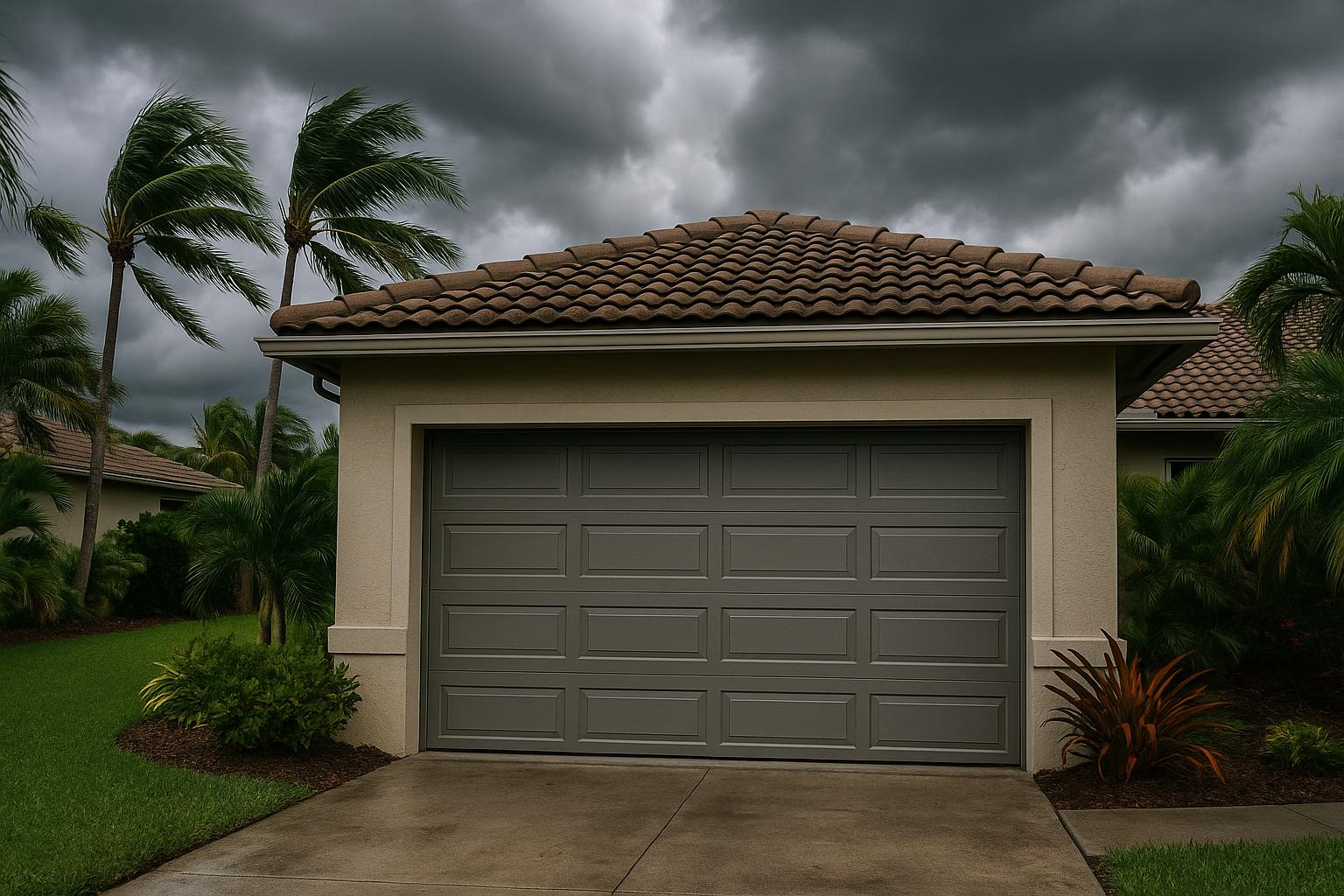
Your Garage Door Is Your Home's Weakest Link in a Hurricane
Living in Boynton Beach means enjoying sunshine, ocean breezes, and a lifestyle most people envy. But every year from June through November, we face the reality of hurricane season. And while most homeowners focus on stocking up on water, batteries, and canned goods, there's one critical part of your home that often gets overlooked: your garage door.
Your garage door is the largest opening in your home. If it fails during a hurricane, wind can rush inside, pressurize the interior, and literally blow the roof off your house. It's not an exaggeration — it's one of the most common ways homes sustain catastrophic damage during major storms in South Florida.
So before the next tropical system spins up in the Atlantic, here's everything you need to know about making sure your garage door is ready.
Why Garage Doors Fail During Hurricanes
Standard garage doors are designed to open and close smoothly under normal conditions. They're not engineered to withstand sustained winds of 100+ mph or the flying debris that comes with a hurricane. Here's what typically goes wrong:
- Wind pressure: High winds push against the large flat surface of your garage door, bowing it inward. If the door flexes too far, it can pop out of its tracks or collapse entirely.
- Debris impact: Branches, patio furniture, roof tiles, and other projectiles can puncture or dent a standard garage door, creating an opening for wind to enter.
- Weak tracks and hardware: Older or poorly maintained doors may have corroded tracks, loose brackets, or worn-out rollers that give way under storm stress.
- Inadequate bracing: Many garage doors simply aren't reinforced to handle lateral wind loads, especially older aluminum or single-layer steel doors.
Option 1: Install a Hurricane-Impact Garage Door
The most effective way to protect your home is to replace your standard garage door with a hurricane-impact rated door. These doors are specifically engineered and tested to withstand high winds and flying debris, meeting the strict Miami-Dade County wind code requirements — the toughest building standards in the country.
Hurricane-impact garage doors feature:
- Reinforced steel or aluminum construction with heavy-gauge panels
- Wind load reinforcement built directly into the door's structure
- Impact-resistant materials that can withstand large and small missile debris testing
- Heavy-duty hardware including stronger tracks, brackets, and hinges
Here in Boynton Beach, we install hurricane-impact garage doors from top manufacturers that meet or exceed Florida Building Code requirements. Beyond storm protection, these doors can also lower your homeowner's insurance premiums — many insurers offer significant wind mitigation discounts when you upgrade to an impact-rated door.
Is It Worth the Investment?
Absolutely. A hurricane-impact garage door typically costs more upfront than a standard door, but consider what you're protecting. The average cost of hurricane damage to a home runs into tens of thousands of dollars. A garage door failure can lead to roof loss, interior water damage, destroyed belongings, and months of displacement. The insurance savings alone can offset a significant portion of the cost over time.
Option 2: Reinforce Your Existing Garage Door
If a full replacement isn't in the budget right now, reinforcing your current garage door is a solid intermediate step. A garage door bracing kit adds horizontal and vertical supports to your existing door, increasing its resistance to wind pressure.
Here's what a typical reinforcement involves:
- Horizontal bracing struts: Steel bars are mounted across each panel of the door to prevent bowing and flexing under wind load.
- Vertical bracing posts: These run from floor to header and lock into place, providing additional structural support during a storm.
- Upgraded track and bracket hardware: Heavier-duty components replace standard hardware to keep the door securely in its tracks.
Bracing kits are a practical solution, but they do have limitations. They improve wind resistance, but they don't provide the same level of debris impact protection as a true hurricane-rated door. Think of it as a meaningful upgrade, not a complete solution.
What About Temporary Panels and Plywood?
You've probably seen neighbors screwing plywood sheets over their garage doors before a storm. While it's better than nothing, plywood has serious drawbacks:
- It's time-consuming to install, especially under the stress of an approaching hurricane
- Standard plywood isn't rated for impact protection
- Improper installation can leave gaps that allow wind intrusion
- It requires storage space for large sheets the rest of the year
If plywood is your only option in an emergency, use at least 5/8-inch exterior-grade plywood and secure it with proper hurricane panel hardware — not just screws into the door frame. But this should be a last resort, not a long-term strategy for storm preparedness in South Florida.
Pre-Season Garage Door Inspection Checklist
Whether you have a hurricane-rated door or a standard one, a pre-season inspection is essential. Here's what should be checked before hurricane season begins:
- Track alignment: Make sure tracks are straight, secure, and free of debris.
- Hardware tightness: Check all bolts, brackets, hinges, and roller mounts. Vibration and daily use loosen hardware over time.
- Spring condition: Worn or weakened springs can fail under storm stress. If your springs are nearing the end of their lifespan, replace them now — not during a hurricane warning.
- Weatherstripping: Inspect the bottom seal and side seals. Damaged weatherstripping allows wind-driven rain into your garage.
- Panel integrity: Look for dents, cracks, rust, or warping in the door panels. Damaged panels are structurally compromised and more likely to fail.
- Opener functionality: Test your garage door opener and make sure you know how to manually disengage it. During a power outage, you'll need to operate the door by hand.
If any of these items need attention, it's far better to address them in May than scramble in August when a storm is three days out and every contractor in Palm Beach County is booked solid.
Don't Wait Until There's a Storm in the Forecast
Every year, we get a surge of calls from Boynton Beach homeowners the moment a hurricane watch is issued. By that point, supply chains are strained, schedules are packed, and options are limited. The best time to prepare your garage door for hurricane season is right now — while the weather is calm and you have time to make thoughtful decisions.
Whether you're interested in upgrading to a hurricane-impact garage door, reinforcing your existing door, or just want a professional inspection to see where you stand, Boynton Beach Garage Door is here to help. We work with homeowners across Boynton Beach, Delray Beach, Boca Raton, Lake Worth Beach, Lantana, and Greenacres to make sure their homes are storm-ready before the first advisory is issued.
Give us a call or reach out online to schedule your pre-season garage door evaluation. A little preparation now can save you from a disaster later.